

XERF® Combination Treatments: Tightening From Within, Refining From the Outside
Skin aging is rarely a uniform process. When you look in the mirror, you do not just see a single isolated issue; you notice a constellation of changes that have
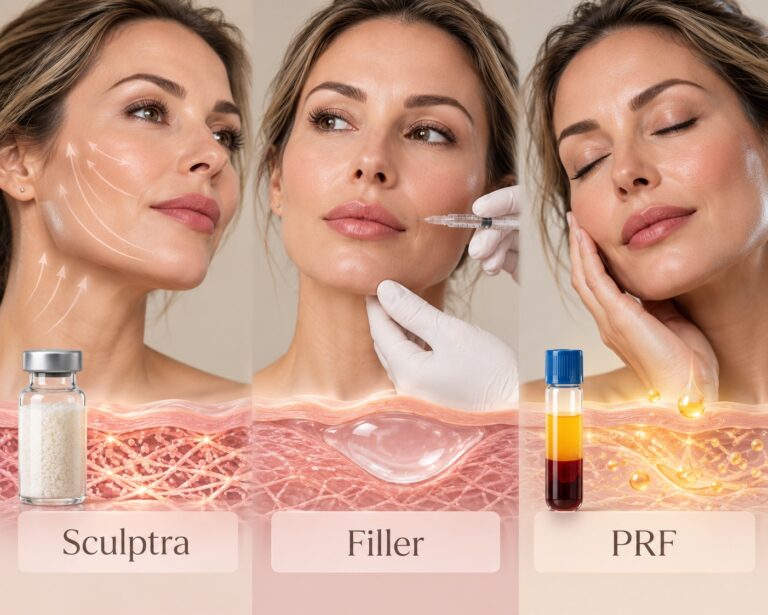
If you are researching Sculptra vs. fillers vs. PRF, you may be trying to answer what sounds like a simple question: which one is better?
At Glamor Medical, we approach the question differently.
Sculptra, dermal fillers, and PRF do not do the same job. Sculptra stimulates collagen and gradually improves structural support. Hyaluronic acid fillers add volume and shape where we want it. PRF uses components from your own blood to support tissue regeneration and improve skin quality.
The right choice depends less on which treatment is trending and more on what has actually changed in your face.
That distinction is important because facial aging is rarely caused by one thing. Collagen declines, facial volume and contours change, skin becomes thinner, and some areas lose support faster than others. Treating all of those changes with the same injectable does not always create the most natural result.
| Sculptra | Hyaluronic Acid Fillers | PRF | |
|---|---|---|---|
| Primary Purpose | Collagen stimulation and gradual structural support | Volume, contour and definition | Regenerative skin and tissue support |
| What Is Used | Poly-L-lactic acid (PLLA-SCA) | Hyaluronic acid gel | Concentrate prepared from your own blood |
| Results Appear | Gradually | Immediately, with settling afterward | Gradually |
| Best Suited For | Collagen loss, broader facial support, firmness | Specific volume loss, contouring and shaping | Skin quality, delicate areas and regenerative treatment |
| Common Areas | Cheeks, temples, jawline and broader facial treatment | Cheeks, lips, chin, jawline, folds and other targeted areas | Under-eyes and areas where skin quality is a priority |
| Main Advantage | Encourages your body to produce collagen | Precise and predictable placement of volume | Uses the patient’s own biological material |
| Treatment Philosophy | Rebuild | Restore and Shape | Regenerate |
This table is useful for understanding the basic differences, but in practice, choosing between these treatments requires much more than matching a concern to a product.
We often consider Sculptra when the problem is not one isolated hollow or line, but a broader loss of collagen and support.
Sculptra is a poly-L-lactic acid biostimulator. Unlike a traditional hyaluronic acid filler, its primary role is to stimulate the body’s own collagen production. The improvement therefore develops gradually rather than appearing entirely on the day of injection.
Current clinical information for Sculptra describes progressive improvement in skin firmness, cheek-area structure and jawline contour, with results that can last up to two years in studied patients. (Source: Sculptra USA)
This makes Sculptra particularly interesting when someone tells us:
“My face just doesn’t look as firm as it used to.”
There may not be one wrinkle to fill. Instead, the entire face may be beginning to look softer or less supported.
In these patients, simply adding filler to individual areas may not address the bigger picture. We may need to improve the foundation first.
Fillers solve a different problem.
Hyaluronic acid fillers physically provide volume and structural support where they are placed. Depending on the product and treatment area, we can use them to restore cheek volume, define the chin or jawline, enhance the lips, or correct specific folds and contours.
Modern fillers also vary considerably in flexibility, firmness and intended treatment area. That allows an experienced injector to choose a product according to how an area moves and how much support it requires. For example, products designed for cheek contouring have different characteristics from those intended for soft, mobile lips. (Source: Restylane)
This is why we don’t see fillers and Sculptra as competitors.
If a patient needs precise projection in the chin, we don’t expect collagen stimulation alone to create the same effect as strategically placed filler. If the lips have lost volume and definition, filler gives us control over shape that Sculptra cannot provide.
Sometimes the face needs collagen. Sometimes it needs volume in a very specific place.
Those are different problems.
PRF brings us into another category entirely: regenerative aesthetics.
Platelet-Rich Fibrin is prepared from the patient’s own blood. After processing, we obtain a concentrate containing platelets, fibrin and naturally occurring growth factors that can be used in areas where our goal is to support tissue quality and regeneration.
At Glamor Medical, one area where PRF is particularly valuable is the under-eye area.
The skin around the eyes is thin and delicate, and what patients call “under-eye hollows” can actually involve several different issues: volume loss, thin or crepey skin, changes in tissue quality, pigmentation, or a combination of them.
That is precisely why we don’t automatically reach for filler every time someone asks us to correct their under-eyes.
Recent research supports this more nuanced approach. A 2025 systematic review of PRF and PRP for periorbital rejuvenation found that PRF was associated with improvements in texture, wrinkles and crepiness, although the authors emphasized that long-term durability remains uncertain and larger standardized studies are still needed. (Source: PubMed Central)
A broader 2025 systematic review of PRP and PRF facial rejuvenation found the strongest evidence for improvements in skin thickness and elasticity, while results for other concerns were more variable. (Source: PubMed)
That distinction matters.
PRF is not simply “natural filler.” Its regenerative role is an important part of why we use it.
This is how we think about these treatments at Glamor Medical.
If we see localized volume loss or a structural feature that needs definition, we may choose filler.
If we see broader collagen loss and declining facial support, Sculptra may become an important part of the plan.
If we are treating delicate tissue where skin quality and regeneration are priorities, PRF may be more appropriate.
But real faces rarely fit perfectly into one category.
A patient may need Sculptra to improve broader facial support and a small amount of filler to restore a specific contour. Another may benefit from filler in the cheeks but PRF around the eyes. Someone else may need very little additional volume and benefit more from collagen stimulation and skin-quality treatments.
That is why asking “Should I get Sculptra, filler, or PRF?” before evaluating the face can put the decision in the wrong order.
Yes. In the right patient, combining them can be exactly the point.
At Glamor Medical, our goal is not to replace every injectable with the newest treatment. It is to use each treatment where it makes sense.
Think of it this way:
Those roles can complement each other.
The treatments do not necessarily need to be performed at the same appointment, and an appropriate sequence depends on the patient’s anatomy, goals, previous treatments and overall plan.
Aesthetic medicine has moved through trends.
For years, adding volume was often the dominant approach. More recently, social media has swung toward the opposite extreme, with claims that patients should avoid filler altogether and choose only regenerative treatments.
We don’t believe either extreme makes sense.
Fillers remain extremely useful when we need controlled volume, projection or contour. Sculptra gives us another tool when collagen loss and broader structural change are the problem. PRF gives us a regenerative option when improving tissue quality is the priority.
The skill is not choosing a favorite treatment.
It is recognizing which problem you are actually treating.
You don’t need to know the answer before your consultation.
In fact, we would rather hear:
“My cheeks look flatter.”
“I always look tired around my eyes.”
“My face doesn’t have the same structure it used to.”
“I want to look fresher, but I don’t want to look filled.”
Those observations tell us much more than asking for a particular syringe.
At Glamor Medical, we evaluate facial proportions, volume distribution, skin quality, collagen loss, movement and the areas that are actually bothering you before developing a treatment plan.
Sometimes the answer is Sculptra. Sometimes it is filler. Sometimes it is PRF.
And often, the most natural result comes from using different treatments for different jobs instead of asking one injectable to do everything.
Skin aging is rarely a uniform process. When you look in the mirror, you do not just see a single isolated issue; you notice a constellation of changes that have
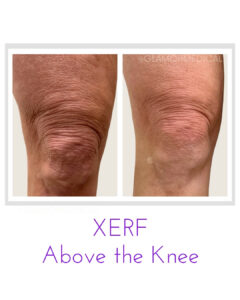
If you are researching XERF before and after results, one question probably matters more than anything else: when will I actually see a difference? XERF is different from treatments designed
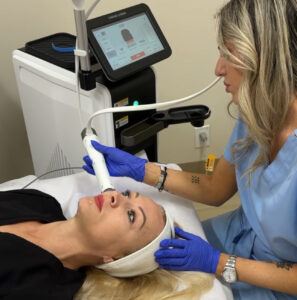
Pricing, Financing & What’s Included “XERF sounds amazing, but what does it actually cost?” If that’s the first question that popped into your head when reading about Kim Kardashian’s favorite